The QR Code Song Request System: Taking Audience Interaction Up a Level
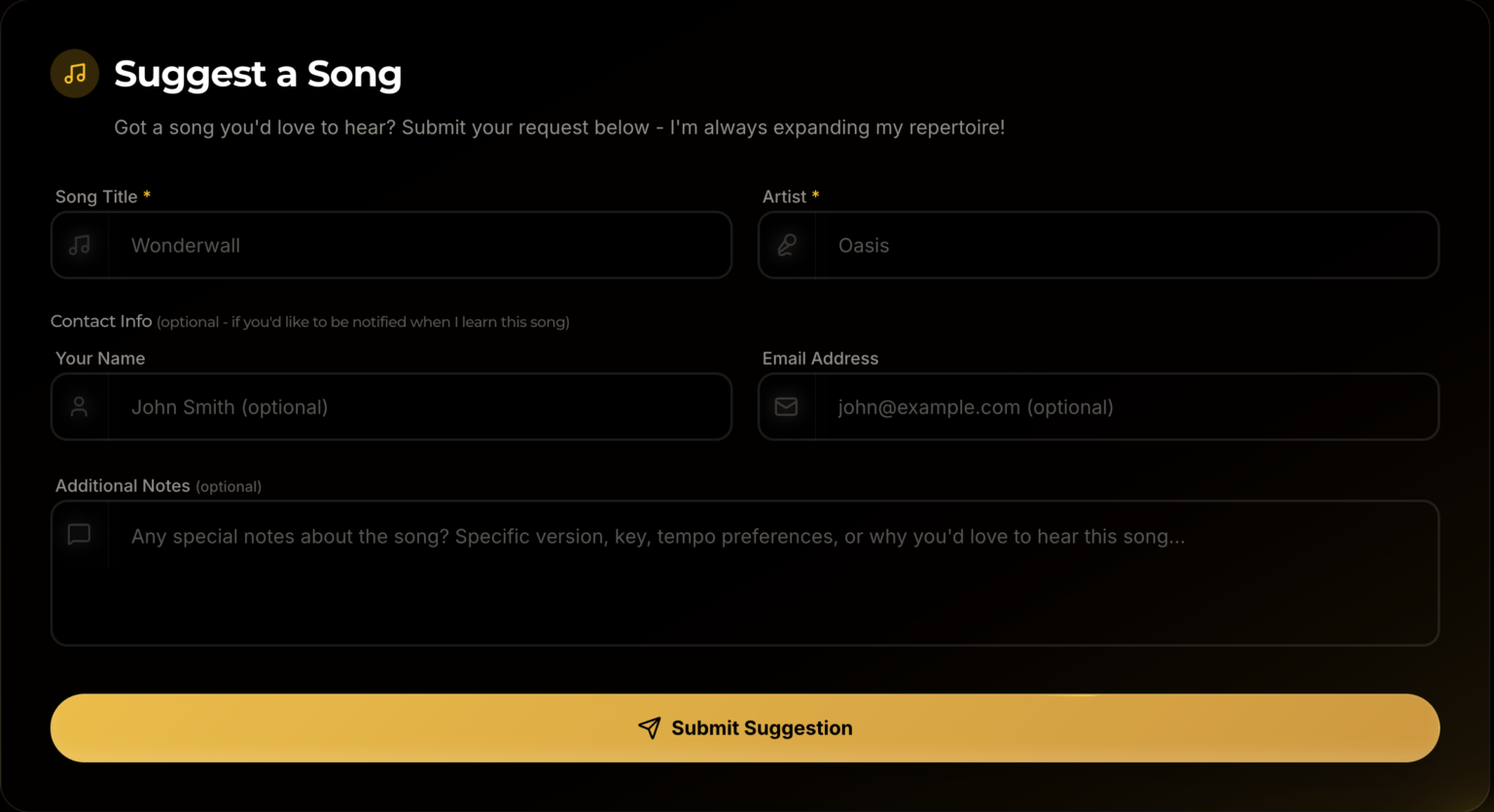
Since I started using my QR Code Song Request System at gigs, it has been hugely popular.
The idea is simple: guests scan the QR code on my banner and request a song directly from a pre-made list of songs I play live. No need to walk up mid-song, yell across the room, or try to describe a song with, “You know, that one with the guitar bit.” Although that still happens!
They scan, search, request, and I see it live.
The system is web based, so it works easily through any browser. On my end, I can switch between my main gigging app, Stage Traxx 4, and the request dashboard on stage without too much fuss. There is a slight delay between songs while I check the requests, but it is not too noticeable, and the payoff is worth it. The crowd gets more involved, and I get a much better idea of what people actually want to hear.
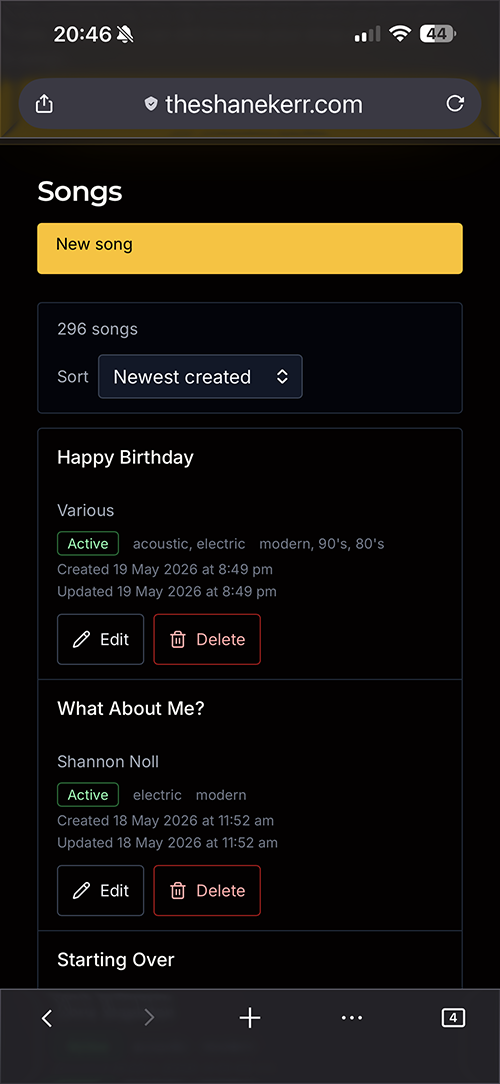
One of the best features is being able to create different song lists for different types of gigs. Some shows are stripped-back acoustic gigs with just me and an acoustic guitar, while others are electric gigs with backing tracks and a bit more energy behind them. The system lets me create separate song lists for acoustic gigs, electric gigs, or a mix of both, then manually choose which list is active for each show. That means the requests people see actually suit the gig I’m playing, instead of opening the floodgates to every song I’ve ever played.
Guests can also tip along with their request, which adds another fun layer to the whole thing. There are still limits in place, though. Each guest gets two free requests per gig, which keeps things fair and stops one person from taking over the entire night with their personal Spotify playlist.
There is also a geolocation feature that requires guests to be within 500 metres of the venue. That means the system is designed for people who are actually at the gig, not someone sitting at home trying to derail the set with ridiculous requests from the couch. Smart move, really.
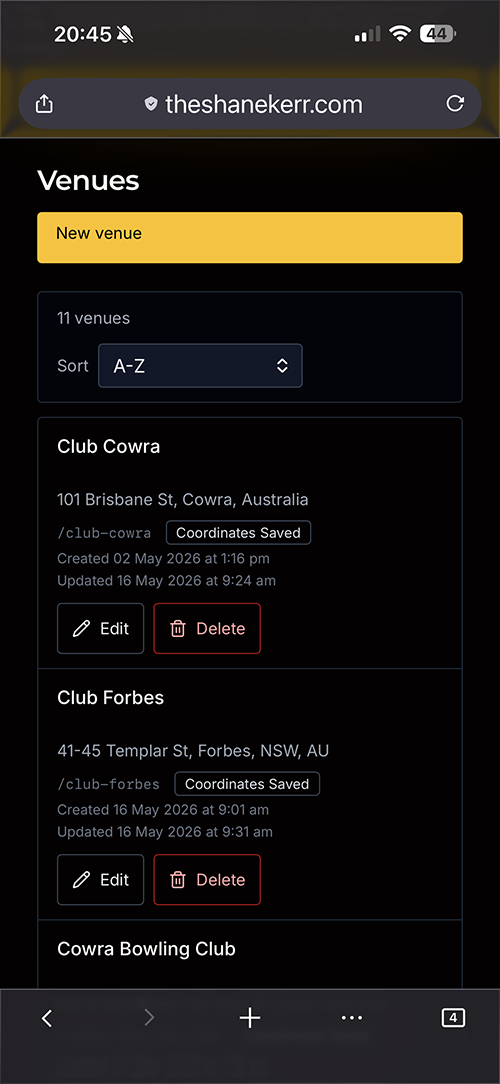
Behind the scenes, the admin side is where it gets really useful.
I can create a list of venues, build custom song lists, access live requests, and accept or deny each one as they come in. The dashboard automatically refreshes every five seconds, so I am not constantly reloading the page or wondering if something new has come through.
The accept or deny option is important, because I still need to read the room. I play a pretty diverse range of songs live, but not every song suits every crowd or every moment. For example, if I’m playing to an older crowd at a club and a younger person requests Metallica, I might deny that request because it clashes with the majority demographic of the room. It’s not about ignoring the person who requested it, it’s about keeping the night working for the room as a whole. The request system gives the audience more interaction, but it doesn’t replace the job of reading the crowd.
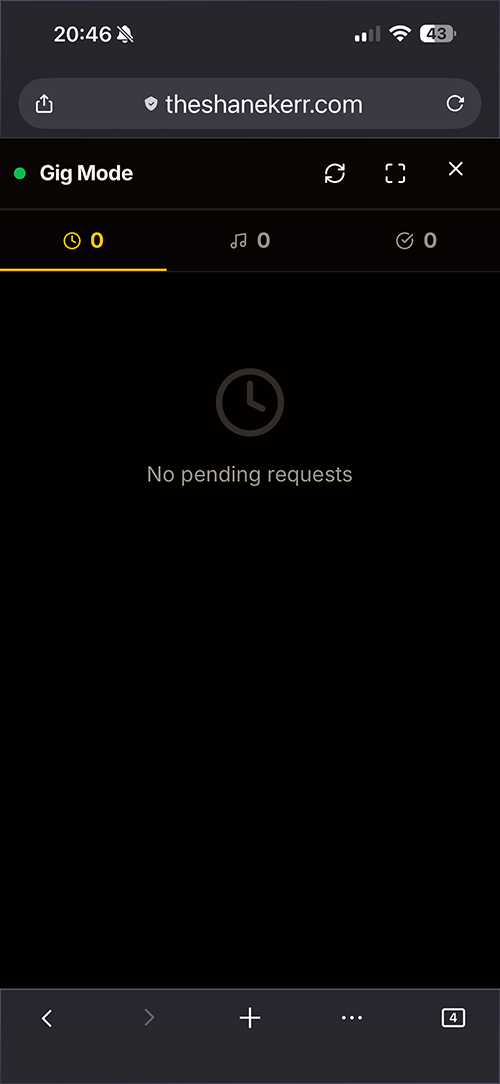
There is also a “Gig Mode”, which gives me a cleaner layout during the show. It separates requests into pending, queued, played, and denied, making it much easier to move through them while I’m performing. That matters, because when you’re on stage, you don’t want to be digging through a messy admin panel while people are waiting for the next song.
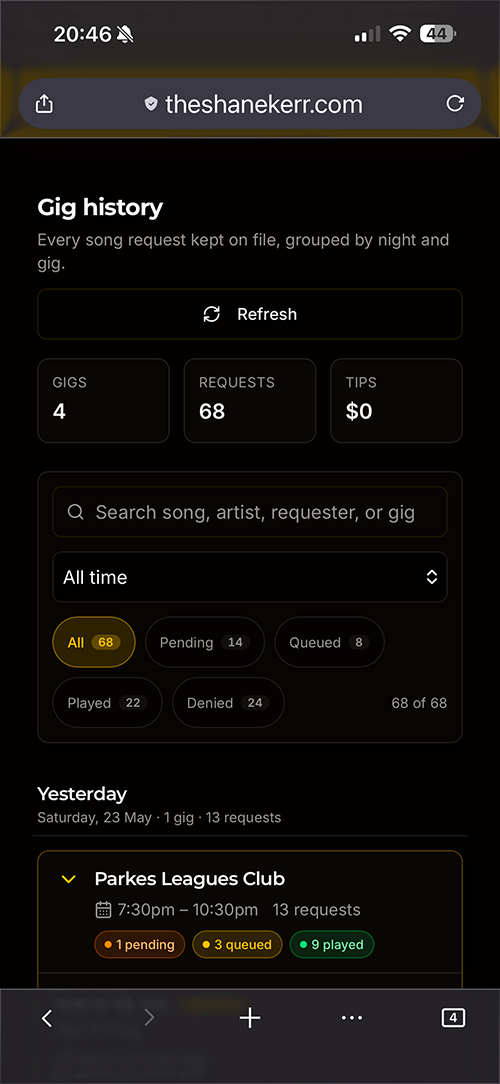
Another feature I really like is the gig history. After each gig, I can go back and see the requests that came through. That gives me a real insight into which songs are popular at different venues and in different towns.
That information is gold.
It means I’m not just guessing what works. I can actually see patterns. Maybe one venue leans heavily into country rock. Maybe another crowd keeps asking for 80s hits. Maybe a certain song keeps popping up everywhere and deserves a more permanent spot in the set. Over time, that request history becomes a useful guide for building better setlists and reading different rooms before I even plug in the guitar.
The system also connects to my gig calendar, so it only becomes active during live gigs. There is even a 30 minute countdown leading up to the start of the show, which helps build a bit of anticipation before the first song kicks off.
For me, this is not just a gimmick. It genuinely changes the way the audience interacts with the show.
People love having a say. They love seeing their request accepted. They love hearing a song come on and knowing they had something to do with it. It turns the gig from something they are just watching into something they are part of.
And that is the whole point.
Live music works best when there is a connection between the performer and the audience. This system has made that connection easier, cleaner, and more fun. It gives people a voice without interrupting the flow of the show, while still allowing me to guide the night properly from the stage.
It is still live music. It is still me playing, singing, reading the room, and making decisions on the night.
But now, the crowd gets a little more say in where the night goes.
And let’s face it, people love using their phones!
I’ll also be making a more detailed video on the system soon, showing how it works from both the audience side and the admin side, so stay tuned.